
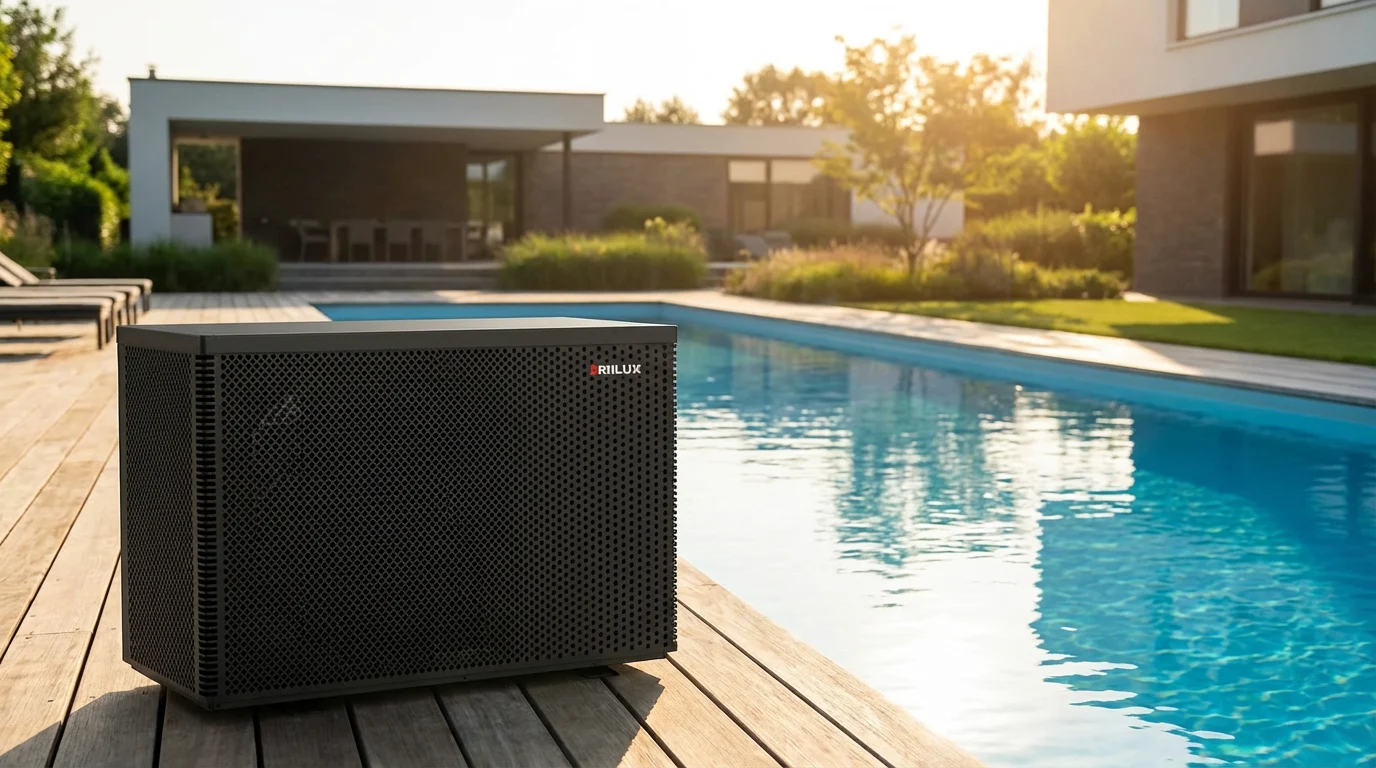
Pool Heat Pump Running Costs Australia: Calculator & Cost Guide
Estimate the electricity cost to heat your pool and understand how pool size, temperature rise, electricity rates, COP, local climate and pool-cover use affect pool heating running costs.
How Much Does a Pool Heat Pump Cost to Run?
There is no single fixed running cost for every swimming pool. The cost of running a pool heat pump depends on pool size, target water temperature, local climate, heat loss, pool-cover use, electricity price and the heat pump's COP under the actual operating conditions.
For the initial heat-up, the thermal energy needed can be estimated from the pool volume and required temperature rise. That figure can then be divided by the heat pump's COP to estimate electrical consumption and multiplied by your electricity tariff to estimate cost.
Use the calculator below to estimate the initial heat-up cost for your pool.
Estimate Your Initial Pool Heat-Up Cost
Enter your pool volume, current water temperature, target temperature, electricity tariff and estimated COP.
The calculator estimates the theoretical electrical energy required to raise the pool water to the selected temperature. Actual real-world cost will also be affected by heat loss while the pool is heating.
Use a realistic COP measured at comparable operating conditions. Actual COP changes with ambient temperature, pool-water temperature, humidity and compressor speed.
$0.00
Estimated electricity cost to raise your pool from the current temperature to the selected target temperature.
Estimate only. The calculation estimates the energy required to heat the pool water and does not include real-time heat loss during the heating period. Actual cost depends on weather, wind, humidity, pool surface area, cover use, plumbing, equipment sizing, electricity tariff and heat-pump performance.
Pool Volume and Temperature Rise Determine the Initial Heating Load
Heating more water or increasing the water temperature by more degrees requires more thermal energy.
The calculator first estimates how much thermal energy is required to raise the pool water to the selected temperature.
It then divides that thermal energy by the selected COP to estimate electrical consumption.
          Thermal energy (kWh) =
          Pool litres × 4.186 × Temperature rise ÷ 3600
          Electrical energy (kWh) =
          Thermal energy ÷ COP
          Estimated electricity cost =
          Electrical energy × Electricity rate
Example Pool Heat-Up Costs
The examples below assume a 5°C temperature increase, COP 10 and electricity at $0.30/kWh.
These figures show the theoretical energy required to raise the water temperature before allowing for heat loss during the heating period.
| Pool Volume | Temperature Rise | Thermal Energy | Electricity at COP 10 | Estimated Cost |
|---|---|---|---|---|
| 30,000 L | 5°C | 174.4 kWh | 17.4 kWh | Approx. $5.23 |
| 40,000 L | 5°C | 232.6 kWh | 23.3 kWh | Approx. $6.98 |
| 50,000 L | 5°C | 290.7 kWh | 29.1 kWh | Approx. $8.72 |
Why actual heat-up cost can be higher: the pool continues losing heat to evaporation, wind, cooler air and surrounding surfaces while the heat pump is operating.
The Biggest Factors Affecting Pool Heat Pump Running Costs
Pool Size
Larger pools contain more water and usually have greater surface area, increasing both initial heating demand and ongoing heat loss.
Target Temperature
Higher target water temperatures generally increase the amount of heat that needs to be added and maintained.
Climate & Wind
Cool nights, wind and exposed sites increase heat loss and can extend heat-pump operating time.
Pool Cover
A cover reduces exposure at the water surface and helps reduce heat loss.
COP
At equivalent conditions, higher COP means more heating output for each unit of electricity consumed.
Electricity Tariff
Energy cost depends on your actual electricity rate, tariff structure and available solar generation.
Heat Pump Sizing
Correct sizing helps the heater meet your required water temperature and swimming season without unrealistic run times.
Installation
Airflow, water flow, plumbing and equipment location can affect real-world performance.
How COP Affects Pool Heat Pump Running Costs
COP stands for Coefficient of Performance. It compares the heating energy delivered by the heat pump with the electrical energy it consumes under the stated operating conditions.
The example below assumes the heat pump is delivering 20 kW of heat. It demonstrates the relationship between COP and electrical input.
| Example COP | Heat Output | Approx. Electrical Input | Meaning |
|---|---|---|---|
| COP 5 | 20 kW | 4 kW | Approximately 5 units of heat delivered for each unit of electricity at that operating point. |
| COP 10 | 20 kW | 2 kW | Approximately 10 units of heat delivered for each unit of electricity. |
| COP 20 | 20 kW | 1 kW | Approximately 20 units of heat delivered for each unit of electricity. |
Maximum COP figures should only be compared at equivalent test conditions. Ambient air temperature, water temperature, humidity and compressor speed all influence COP.
What Is COP?Heating a Cold Pool Is Different From Maintaining a Warm Pool
Initial Heat-Up
The heat pump must add enough thermal energy to raise the entire volume of pool water from its starting temperature to the target temperature.
Maintaining Temperature
Once the pool reaches the target temperature, the heater primarily needs to replace heat that the pool loses to the environment.
Holding Cost
Ongoing cost depends heavily on evaporation, wind, overnight temperature, surface area, target temperature and pool-cover use.

Pool Heat Pump vs Gas Heater Running Costs
Pool-heating technologies use energy differently. The final running cost depends on heater efficiency, energy prices, required heat-up speed, climate and pool heat loss.
| Heating Type | How It Operates | Running Cost Consideration | Common Application |
|---|---|---|---|
| Gas Pool Heater | Burns gas to generate heat directly. | Can provide rapid heating. Cost depends strongly on gas price, efficiency and heating duration. | Fast heat-up, spas and intermittent use. |
| On/Off Heat Pump | Compressor generally operates at fixed output while running. | Efficiency depends on equipment design and operating conditions. | Basic electric pool heating. |
| DC Inverter Heat Pump | Compressor speed can vary as heating demand changes. | Can reduce unnecessary full-speed operation when heating demand falls. | Regular residential pool heating. |
| High-Efficiency Inverter Heat Pump | Combines variable-speed operation with high-efficiency system design. | Can provide low electrical input at favourable operating conditions, but actual COP varies. | Regular use where efficiency is a major priority. |
There is no universal cheapest heater for every situation. The correct comparison needs to consider local electricity and gas prices, required heat-up speed, target temperature, pool cover use and swimming habits.
How to Reduce Pool Heat Pump Running Costs
Use a Pool Cover
Reduce avoidable heat loss whenever the swimming pool is not being used.
Choose a Realistic Temperature
Higher water temperatures can increase the amount of heat the pool loses to its surroundings.
Correctly Size the Heat Pump
Consider pool dimensions, climate, target temperature, cover use and swimming season rather than selecting from pool litres alone.
Use Favourable Operating Periods
Where practical, warmer daytime conditions and available solar generation may help reduce grid-energy cost.
Pool Heating Running Costs in Melbourne, Geelong, Ballarat and Cooler Regions
Local climate can substantially influence heat loss and how long a pool heat pump needs to operate.
In cooler Victorian locations, spring and autumn heating can be more demanding than summer-only heating because overnight temperatures are lower and the difference between the desired water temperature and the surrounding air can be greater.
This is why two pools containing the same number of litres can have different heating costs in different locations.
Surface area, wind exposure, cover use, swimming season and target temperature should all be considered alongside pool volume.

Efficiency Is More Than a Maximum COP Number
Orilux R290 inverter pool heat pumps combine variable-speed operation with pool-heating technology designed for efficient operation.
When comparing heat pumps, consider heating capacity, COP at equivalent test conditions, heat exchanger design, operating range, correct sizing, installation quality and local support.
Pool Heat Pump Running Cost Questions
Answers to common questions Australian pool owners ask about pool heating electricity use and running costs.
How much does a pool heat pump cost to run?
There is no single fixed running cost. It depends on pool size, heat loss, target water temperature, local climate, cover use, electricity tariff and heat-pump COP under the actual operating conditions. Use the calculator above to estimate the initial heat-up component.
Are pool heat pumps expensive to run?
Pool heat pumps can be an efficient method of pool heating because they transfer heat from the surrounding air into the pool rather than relying solely on direct electrical resistance heating. Actual cost still depends on heating demand, equipment efficiency, electricity price and pool heat loss.
How much electricity does a pool heat pump use?
Electrical consumption depends on the required heat output and the heat pump's COP at the operating condition. For example, delivering 20 kW of heat at COP 10 requires approximately 2 kW of electrical input at that operating point.
How is pool heat pump running cost calculated?
For an initial heat-up estimate, calculate the thermal energy required to raise the pool water by the required number of degrees, divide by the assumed COP to estimate electrical energy consumption, then multiply by the electricity tariff. Ongoing maintenance cost also depends on real heat loss.
Does a higher COP reduce pool heating running costs?
At equivalent operating conditions, a higher COP means more heating energy is being delivered for each unit of electrical energy used. COP changes with conditions, so maximum COP figures should not be treated as constant performance.
Is gas or a heat pump cheaper for pool heating?
It depends on heater efficiency, electricity and gas tariffs, required heat-up speed, pool heat loss and how frequently the heater is used. Gas is often used where fast heat-up is important, while inverter heat pumps are commonly used for efficient regular pool heating.
Does a pool cover reduce pool heating costs?
Yes. A pool cover reduces exposure at the water surface and can reduce heat loss, particularly overnight and during windy or cooler weather. Less heat loss means less energy is required to maintain the desired pool temperature.
Is an inverter pool heat pump cheaper to run?
A well-designed inverter pool heat pump can vary compressor speed as heating demand changes instead of operating only at one fixed output. Actual running cost still depends on the overall system, sizing, weather, target temperature and electricity tariff.
Is it cheaper to leave a pool heat pump running?
There is no universal answer. Maintaining temperature may avoid a large reheating cycle, but keeping the pool warm also means continually replacing heat loss. The most economical strategy depends on climate, cover use, target temperature and how frequently the pool is used.
How much does it cost to heat a 30,000 litre pool?
Raising 30,000 litres of water by 5°C requires approximately 174.4 kWh of thermal energy. At COP 10 this represents about 17.4 kWh of electrical energy, or approximately $5.23 at $0.30/kWh before allowing for heat loss during the heating period.
How much does it cost to heat a 40,000 litre pool?
Raising 40,000 litres of water by 5°C requires approximately 232.6 kWh of thermal energy. At COP 10 this represents around 23.3 kWh of electrical energy, or approximately $6.98 at $0.30/kWh before allowing for heat loss during heating.
How much does it cost to heat a 50,000 litre pool?
Raising 50,000 litres of water by 5°C requires approximately 290.7 kWh of thermal energy. At COP 10 this represents around 29.1 kWh of electrical energy, or approximately $8.72 at $0.30/kWh before allowing for heat loss during heating.
Need Help Estimating Your Pool Heating Costs?
Avenza Pro can help match your pool size, location, target temperature and swimming season with an appropriate Orilux pool heat pump and authorised dealer.